If you are comparing a timing belt vs timing chain, the most important thing to know is that both perform the same essential job, but they are built differently and have different maintenance requirements. Some modern engines also use a wet belt, which adds another layer of confusion.
Knowing which system your car uses matters because a worn or failing timing component can lead to serious engine problems. The correct replacement interval, warning signs and maintenance requirements depend on your specific vehicle and engine, so it is better to check than assume.
Does My Car Have A Timing Belt Or Timing Chain?
There is no reliable rule based purely on the age, make or model of your car. Different engines within the same vehicle range can use completely different timing systems.
The safest ways to check are:
- Look in your vehicle handbook or service schedule
- Check the manufacturer’s information for your exact engine
- Identify the engine code
- Ask a garage to check using your registration and vehicle details
- Review your service history for previous timing belt or chain work
If you have bought a used car with an incomplete maintenance history, confirming what timing system it uses is particularly worthwhile.
What Does The Engine Timing System Actually Do?
Your engine relies on precise timing.
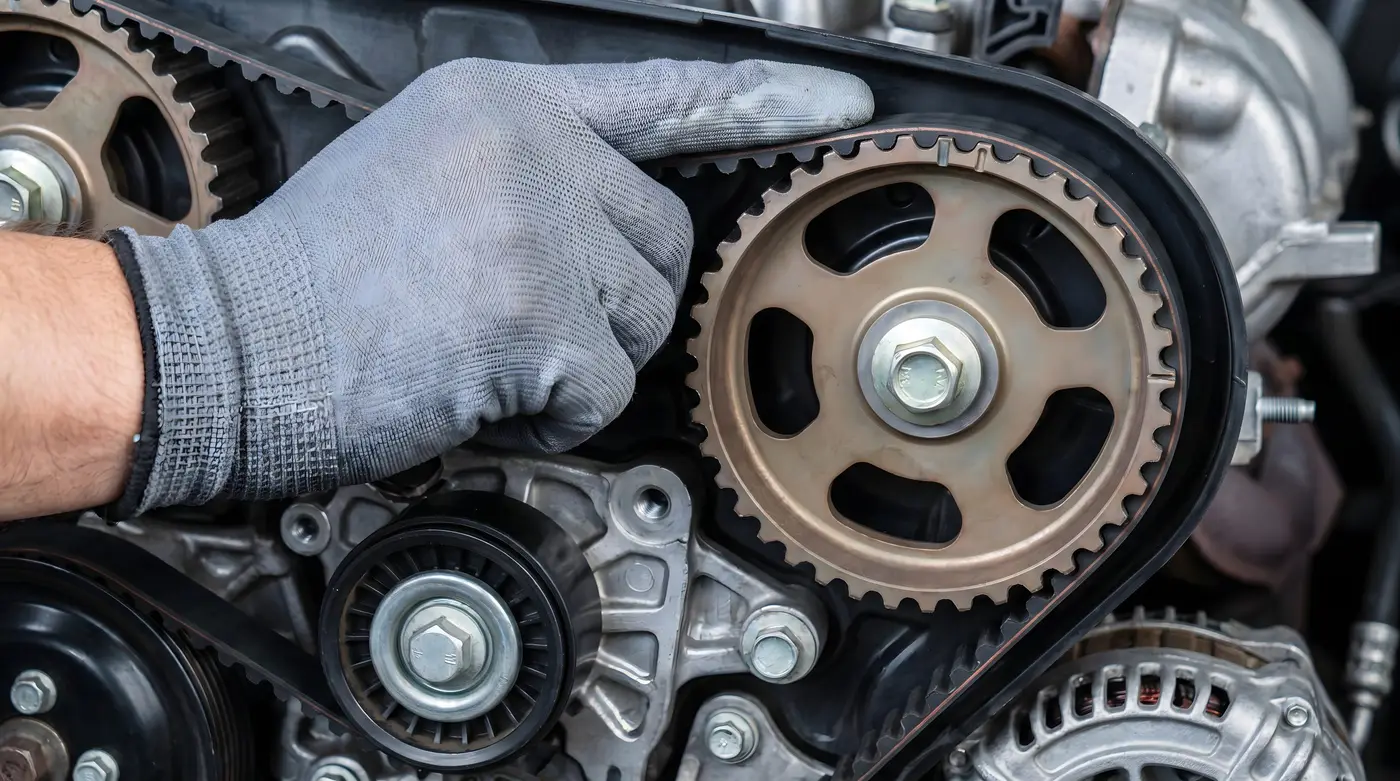
The crankshaft controls the movement of the pistons, while the camshaft controls the opening and closing of the engine’s valves. The timing belt or chain keeps these components synchronised so everything happens at the correct moment.
If the timing moves significantly out of position, the engine may run poorly or stop altogether. In some engines, a complete timing-system failure can allow internal components to collide, potentially causing extensive damage.
The belt or chain may be hidden from view, but it performs one of the most important jobs inside the engine.
What Is A Timing Belt?
A conventional timing belt is a reinforced toothed belt, usually made from rubber-based materials. It runs around pulleys connecting the crankshaft and camshaft.
Timing belts are designed to operate for a specified period, but they do not last indefinitely.
Manufacturers set replacement schedules based on factors such as age, mileage and engine design. There is no single timing belt replacement interval that applies to every vehicle, which is why your manufacturer’s schedule should always take priority over generic online advice.
A timing belt can deteriorate through age as well as mileage. This is particularly important for lower-mileage cars that may still have an older original belt fitted.
What Is A Timing Chain?
A timing chain performs the same basic function but uses a metal chain rather than a reinforced belt.
Chains usually operate inside the engine and are lubricated by engine oil. Although they are often associated with longer service lives than conventional belts, that does not mean every timing chain will last indefinitely.
Wear can affect the chain itself as well as components such as:
- Tensioners
- Guides
- Sprockets
- Lubrication systems
Oil condition can also be particularly important because many timing chain systems rely on correct oil pressure and lubrication to operate properly.
That is one reason regular servicing matters even when a manufacturer does not specify a routine timing chain replacement interval.
Timing Belt vs Timing Chain At A Glance
| Feature | Timing Belt | Timing Chain |
|---|---|---|
| Material | Reinforced belt material | Metal chain |
| Location | Commonly behind engine covers | Usually inside the engine |
| Lubrication | Conventional belts normally run dry | Usually lubricated by engine oil |
| Replacement | Often has a scheduled interval | Depends heavily on engine design and condition |
| Common concerns | Age, cracking, deterioration | Stretch, tensioner or guide wear, lubrication issues |
| Failure risk | Can cause serious engine damage | Can also cause serious engine damage |
Neither system is automatically “better”. What matters is whether it is correctly maintained for the particular engine.
Where Does A Wet Belt Fit In?
A wet belt, sometimes called a belt-in-oil system, is still a timing belt, but unlike a conventional dry belt, it runs inside the engine where it is exposed to engine oil.
This design is found in a number of modern engines, including some Ford EcoBoost applications.
Wet belts require particular attention because belt material can deteriorate over time. In some cases, degraded material can enter the lubrication system and contribute to oil-flow problems.
This is why it is important not to assume that every vehicle described as having a “timing belt” uses the same setup.
Motorart Autos carries out specialist wet belt and timing-system work at its Chilton Polden workshop. You can explore the wider range of vehicle repair services if you are unsure which type of repair your vehicle may need.
What Are The Warning Signs Of Timing-System Trouble?
Timing problems do not always produce obvious symptoms before becoming serious, but there are warning signs worth investigating.
These can include:
- Rattling or ticking noises, particularly during a cold start
- Engine warning lights
- Misfires
- Difficult starting
- Reduced power
- Uneven engine performance
- Timing-related diagnostic fault codes
A rattling engine does not automatically mean the timing chain has failed. Likewise, poor performance can have many possible causes.
Correct diagnosis matters because replacing timing components without confirming the actual fault can be expensive and unnecessary.
What Happens If A Timing Belt Or Chain Fails?
The consequences depend on the engine.
If the belt or chain breaks or allows the engine timing to move significantly out of position, the engine may stop immediately. On some engine designs, pistons and valves can then make contact, causing internal damage.
That can turn preventative timing-system maintenance into a much larger engine repair.
The practical lesson is not to panic at every noise, but not to ignore known replacement schedules or genuine warning signs either.
If your vehicle manufacturer has specified a timing belt change interval, follow it. If your service history is unclear, establish what has actually been replaced before assuming the work has already been done.
How Can I Check My Car Before Booking A Repair?
Start with information rather than assumptions.
Check your handbook, service records and manufacturer maintenance schedule. If you have recently bought the vehicle, look for invoices showing whether timing-system work has already been carried out.
You can also use official resources such as the GOV.UK vehicle recall checker to see whether your vehicle is affected by a relevant manufacturer safety recall.
If the history is incomplete, a garage can use the registration and engine information to establish which system is fitted and advise on the appropriate next step.
Frequently Asked Questions About Timing Belts & Chains
How Long Does A Timing Belt Last?
There is no universal interval. Replacement schedules vary by manufacturer, engine, mileage and age. Check the schedule for your exact vehicle rather than relying on a generic mileage figure.
Do Timing Chains Need Replacing?
Some timing chains may operate for very high mileages, but they can still wear. Chain stretch, worn guides, tensioner problems or lubrication issues may eventually require repair or replacement.
What Does A Failing Timing Chain Sound Like?
One possible symptom is a metallic rattling noise, particularly during a cold start. However, several engine faults can cause similar noises, so diagnosis is recommended before assuming the chain is responsible.
Is A Wet Belt The Same As A Timing Belt?
A wet belt is a type of timing belt, but it operates inside the engine oil rather than running dry outside the lubricated part of the engine.
Can I Drive With A Noisy Timing Chain?
An unexplained timing-area rattle should be investigated rather than ignored. Whether the vehicle is safe to continue driving depends on the cause and severity of the fault.
Not Sure Which Timing System Your Car Uses?
If your service history is unclear, you have noticed unusual engine noises or you simply want to know whether your vehicle uses a belt, chain or wet belt, getting the correct information is the best place to start.
Motorart Autos handles specialist timing-system work from its Chilton Polden workshop and supports customers across Somerset and North Somerset. Collection and return can be arranged for suitable workshop repairs, with loan cars available subject to availability.